Cat’s Eye Nebula
RA 18h 01m · Dec +66° 34′
5′

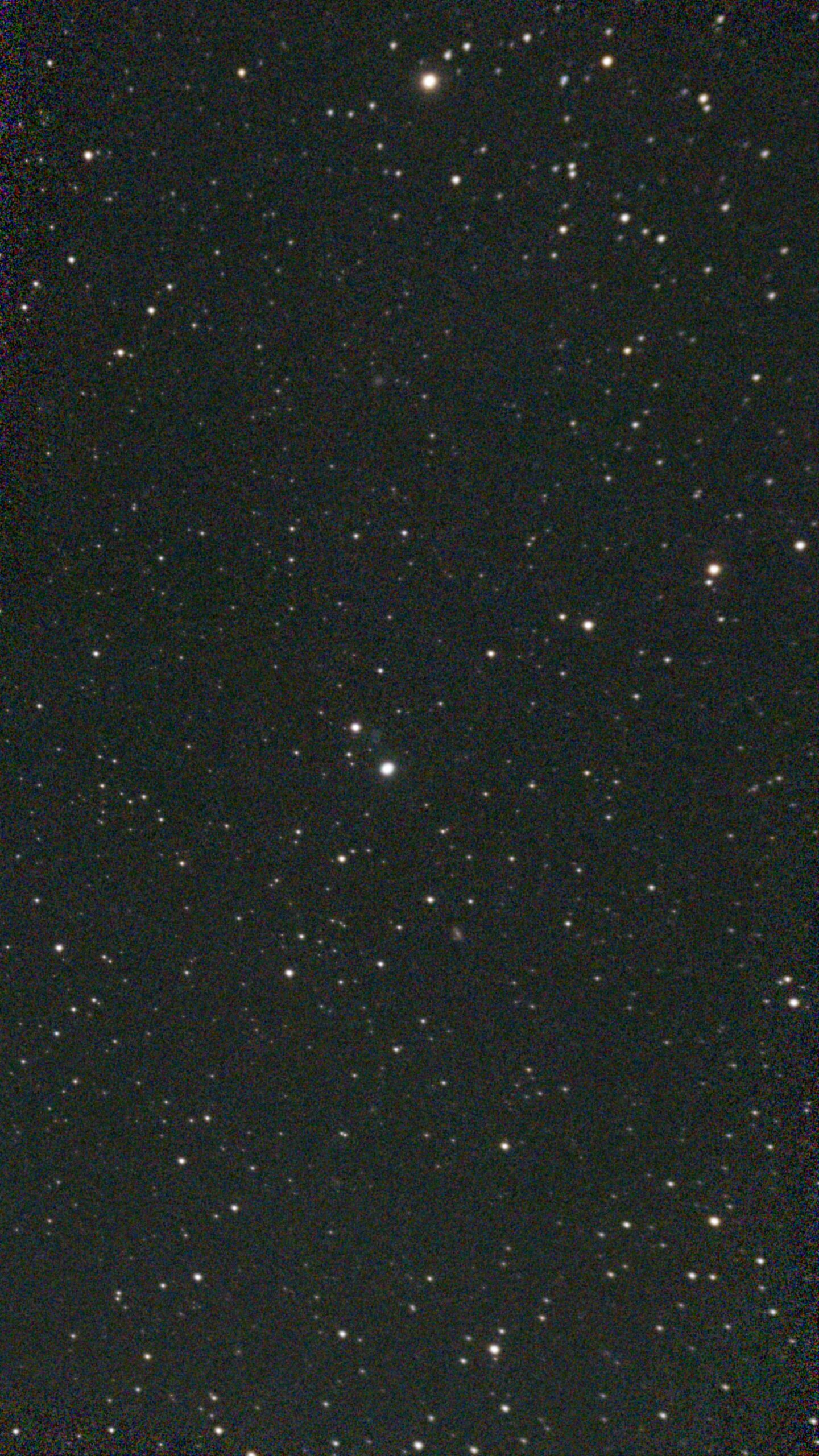
One of the most complex and structurally rich planetary nebulae known, with concentric shells, jets, knots, and arcs within the main disc. Deep imaging reveals at least eleven outer halos. Circumpolar from the UK.

Planetary nebula

Cat’s Eye Nebula

C 6 · Draco
These photons are ~3,300 years old
⧉ 5 versions of this capture — pick one to see its image and log
Date
22/03/2026
Location
52.7618° N, 2.3775° W
Integration
36m (217 × 10s)
Software
ZWO Seestar app
Notes
·
Total effort
3h over 1 night
Moon
🌒Waxing crescent, 16% lit
Plate solve
Centre RA
18h 00m 42.9s
Centre Dec
+66° 33′ 35″
Field
42.8′ × 76.1′
Pixel scale
1.19″/px
Orientation
73.7° E of N
Hemisphere
Northern
Also in this frame
NGC 6552C6IC 4677

Catalogued objects inside the plate-solved field, nearest the centre first. Highlighted names have their own photo here.

Where to find it

Finder chart
+66°10′+66°20′+66°30′+66°40′+66°50′+67°17h54m17h55m17h55m17h56m17h57m17h57m17h58m17h59m17h59m18h18h01m18h01m18h02m18h03m18h03m18h04m18h05m18h05m18h06m18h07m18h07mNGC 6543NGC 6552IC 4677NE42.8′ x 76.1′5′

Star field and catalogued objects inside the plate-solved field, oriented to the solve. Fully offline, from the bundled star and deep-sky catalogues.

Interactive sky chart centred on 18 00 42.9 +66 33 35. Drag to pan, scroll to zoom, click a star or object to identify it. Zoom in to the plate-solved field for the DSS survey photo; zoom out for constellation figures and neighbouring catalogue objects. Fully self-hosted: the star and deep-sky catalogues and the survey image are all served from this site, so nothing external loads. Imagery: DSS2 colour (STScI / POSS-II). Constellation figures © Dominic Ford (GPLv3).
Captured from · Telford, UK
52.7618° N, 2.3775° W · view on OpenStreetMap ↗ · Place data © GeoNames (CC BY)

Frequently asked questions

What kind of object is C 6?
C 6 is a planetary nebula.
Which constellation is C 6 in?
C 6 lies in the constellation Draco.
How far away is C 6?
The light in this image left C 6 roughly ~3,300 years ago, so that is how far back in time you are seeing it.
What are the coordinates of C 6?
C 6 sits at right ascension 18h 00m 43s and declination +66° 33′ 35″ (J2000).
When is the best time to photograph C 6?
C 6 is circumpolar from around 53°N - it never sets, and rides highest (about 76° altitude) on evenings around June.
What else is in this frame?
The plate-solved field also contains NGC 6552 and IC 4677.
What equipment was used to photograph C 6?
This image of C 6 was captured with ZWO Seestar S50 and ZWO Seestar S50 Camera.
How much exposure time went into this image?
This image of C 6 represents 36m (217 × 10s) + 36m (217 x 10s) of total integration time.

Comments

Leave a comment

Your email is never shown. Comments are held for moderation before they appear.