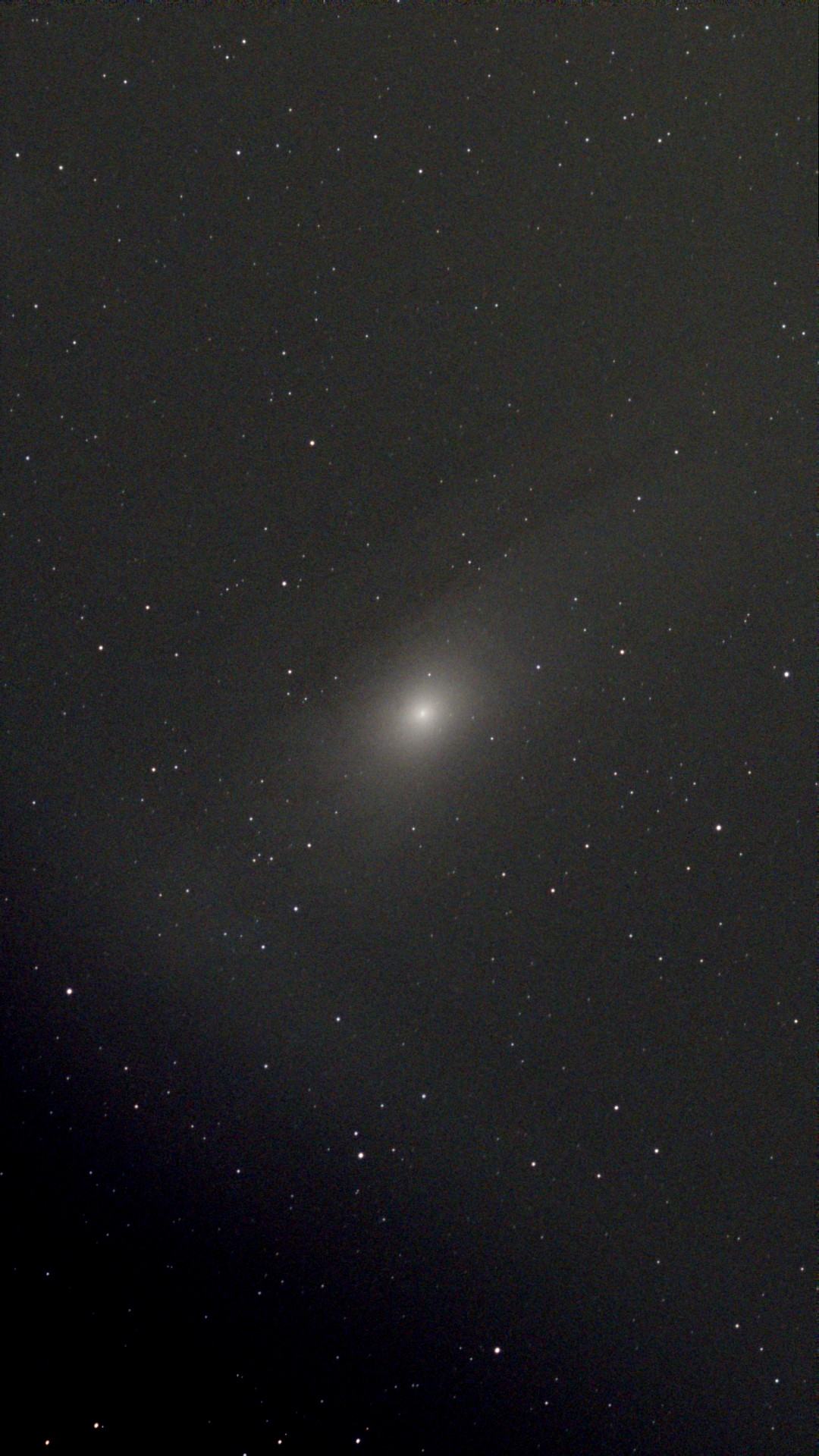
The nearest large spiral galaxy and the most distant object visible to the naked eye. At over twice the diameter of the Milky Way, M31 spans more than 3° of sky — a wide-field mosaic is needed to capture it in full. Its satellite galaxies M32 and M110 fit in the same frame.
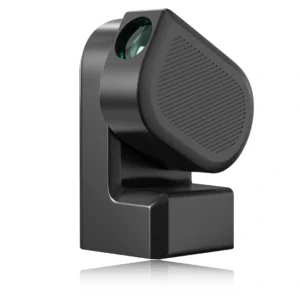 ZWO Seestar S50ZWO Seestar S50Aperture 50mm · Focal length 250mm · f/5 · Apo triplet with ED element · Sony IMX462 colour CMOS sensor (1920 x 1080, 2.1MP)…View equipment →LPBroadband light-pollution filter. Suppresses the sodium and mercury glow of streetlights while passing the main nebula emission lines and natural star colours.ZWO Seestar S50ZWO Seestar S50Aperture 50mm · Focal length 250mm · f/5 · Apo triplet with ED element · Sony IMX462 colour CMOS sensor (1920 x 1080, 2.1MP)…View equipment →
Catalogued objects inside the plate-solved field, nearest the centre first. Highlighted names have their own photo here.
Star field and catalogued objects inside the plate-solved field, oriented to the solve. Fully offline, from the bundled star and deep-sky catalogues.
Interactive sky chart centred on 0 43 39.1 +41 12 44. Drag to pan, scroll to zoom, click a star or object to identify it. Zoom in to the plate-solved field for the DSS survey photo; zoom out for constellation figures and neighbouring catalogue objects. Fully self-hosted: the star and deep-sky catalogues and the survey image are all served from this site, so nothing external loads. Imagery: DSS2 colour (STScI / POSS-II). Constellation figures © Dominic Ford (GPLv3).
Comments