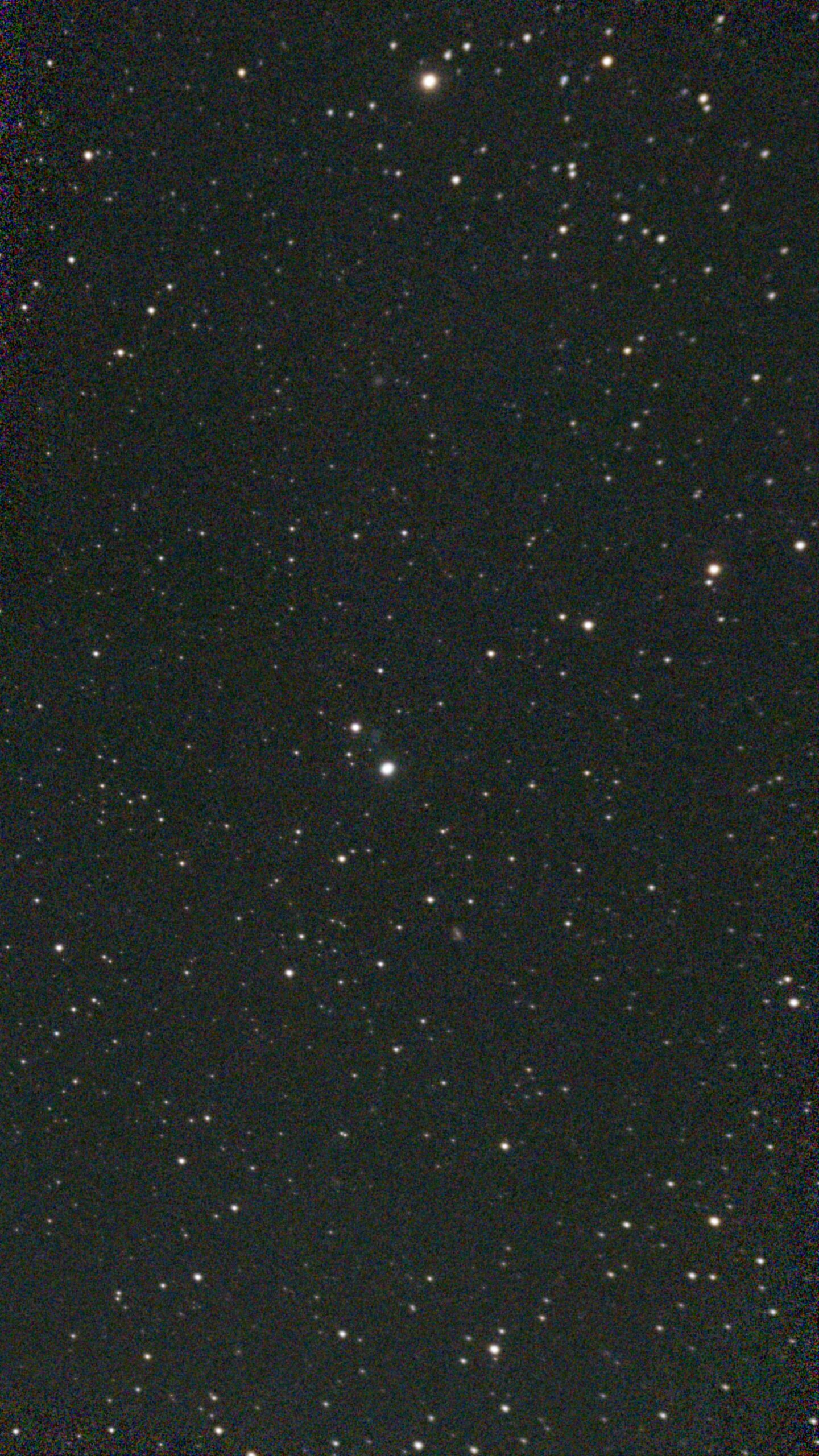
One of the most complex and structurally rich planetary nebulae known, with concentric shells, jets, knots, and arcs within the main disc. Deep imaging reveals at least eleven outer halos. Circumpolar from the UK.
Catalogued objects inside the plate-solved field, nearest the centre first. Highlighted names have their own photo here.
Star field and catalogued objects inside the plate-solved field, oriented to the solve. Fully offline, from the bundled star and deep-sky catalogues.
Interactive sky chart centred on 18 00 42.9 +66 33 35. Drag to pan, scroll to zoom, click a star or object to identify it. Zoom in to the plate-solved field for the DSS survey photo; zoom out for constellation figures and neighbouring catalogue objects. Fully self-hosted: the star and deep-sky catalogues and the survey image are all served from this site, so nothing external loads. Imagery: DSS2 colour (STScI / POSS-II). Constellation figures © Dominic Ford (GPLv3).
Comments