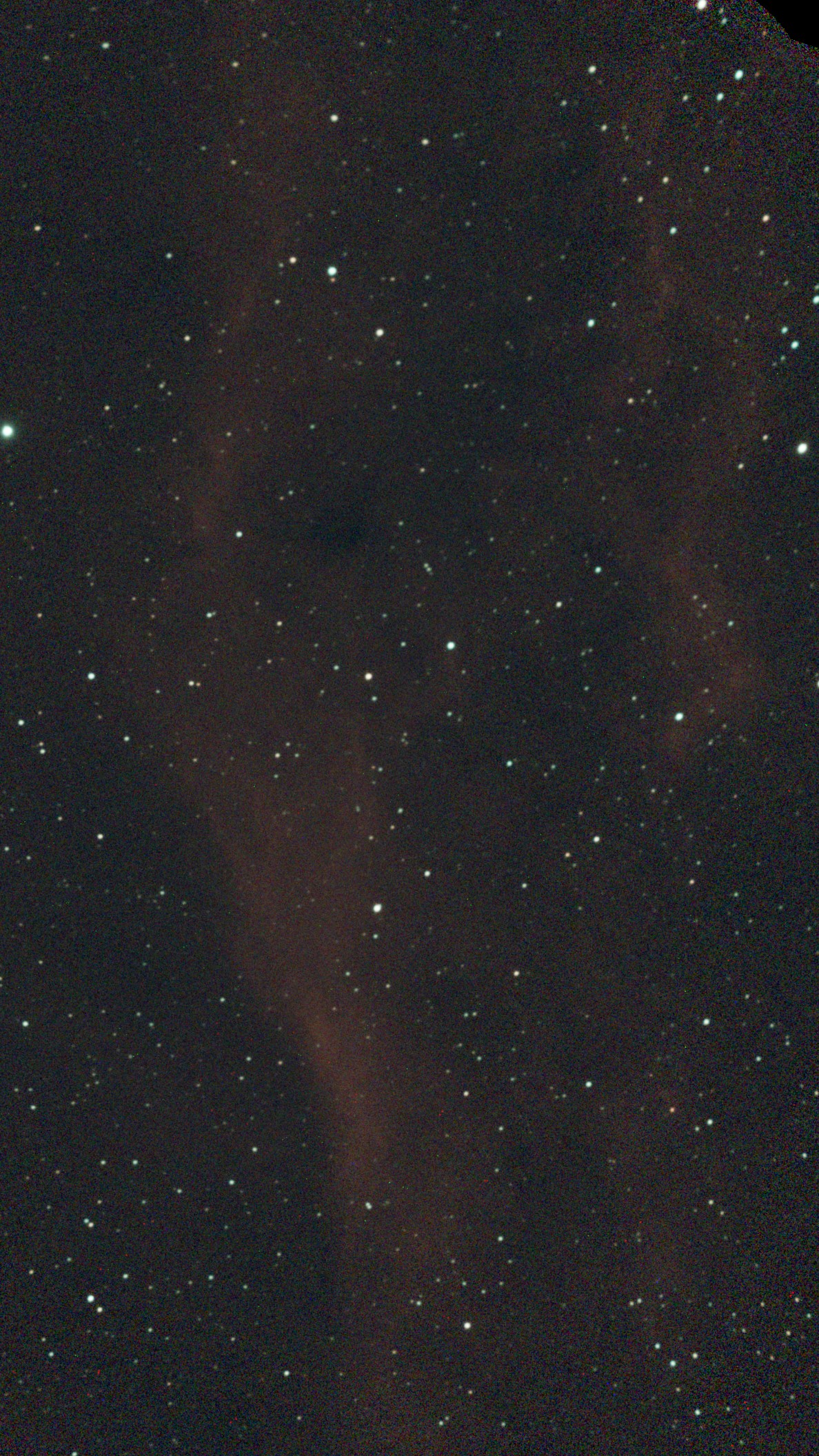
A very large but low-surface-brightness emission nebula illuminated by the hot O7 star Xi Persei. The shape maps the state of California. Requires an Hα filter for best results as it is faint in broadband; nearly 2.5° long and challenging to frame without a wide-field mosaic.
Catalogued objects inside the plate-solved field, nearest the centre first. Highlighted names have their own photo here.
Star field and catalogued objects inside the plate-solved field, oriented to the solve. Fully offline, from the bundled star and deep-sky catalogues.
Interactive sky chart centred on 4 00 03.4 +36 22 39. Drag to pan, scroll to zoom, click a star or object to identify it. Zoom in to the plate-solved field for the DSS survey photo; zoom out for constellation figures and neighbouring catalogue objects. Fully self-hosted: the star and deep-sky catalogues and the survey image are all served from this site, so nothing external loads. Imagery: DSS2 colour (STScI / POSS-II). Constellation figures © Dominic Ford (GPLv3).
Comments